The One Who Walks After Death
Iceland and the Norse settlements of the North Atlantic · Saga age, ninth to eleventh century, recorded thirteenth and fourteenth century
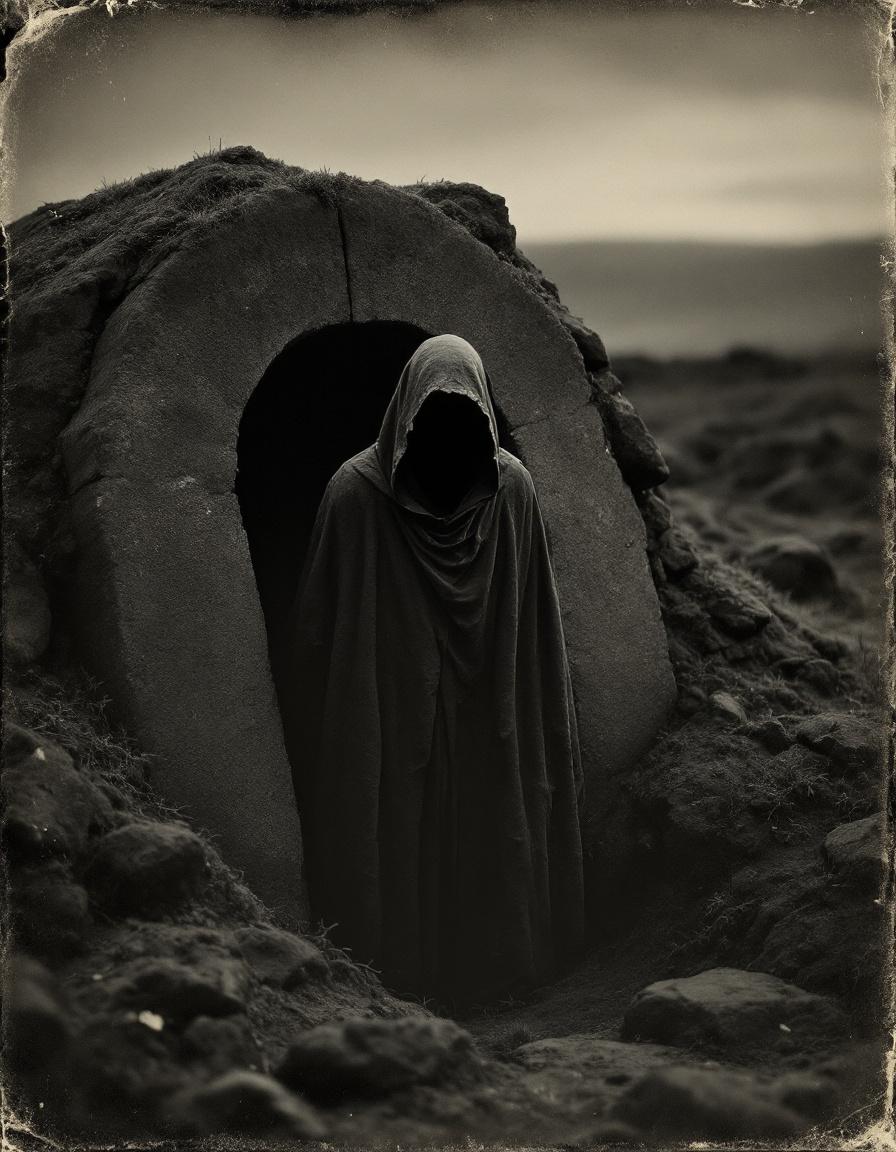
The Old Norse word is draugr. The plural is draugar. The sagas do not translate it. The English translators, working in the late nineteenth century, render it variously as the dead-walker, the again-walker, the barrow-dweller, or simply the ghost. None of the renderings carry the whole of the word. The word means, more precisely, one who has died and has not finished.
The sagas record him often.
He is recorded in Eyrbyggja, in the Froda hauntings, where Thorgunna of the Hebrides dies on the way to her burial and the company that carried the body cannot keep the household clean of her, and where, after her death, six others die one after the next and walk in the household until the door-doom is summoned. He is recorded in Laxdaela, where Hrapp of the Hebrides arranges before his death to be buried standing in the doorway of his hall, the better, he says, to keep watch over his household, and the records show what the watch becomes. He is recorded most fully in Grettis Saga, in the long account of the haunting at Thorhallsstadir and the encounter that closed it.
He is not, in the sagas, a translucent figure. The sagas are clear on this. He is solid. He is heavy. He is colder than the living and stronger than the living, and the strength is recorded as having grown since the burial.
On his appearance
The recorded descriptions converge.
He is the colour the body becomes after the burial has had time. The sagas use words that the translators render as blue-black, as hel-blue, as corpse-pale. The eyes are not always given. Where they are given, they are recorded as open. The hair, the records say, has continued to grow. The fingernails, the records say, have continued to grow. He is dressed in the clothes he was buried in, where the burial was performed, and in the clothes he died in where it was not.
His weight is the detail the sagas return to. He has, the sagas say, the weight of a man and the weight again of the earth that lies above him. To wrestle him, as Grettir wrestled Glamr, is to wrestle a man who carries his burial mound on his shoulders. Glamr is described in Grettis Saga as so heavy that the boards of the hall buckled where he walked.
He does not appear far from where he was buried. This is the second consistent detail. The barrow-dweller stays near the barrow. The household-walker stays near the household. He has been buried in a place. The place holds him. The place does not, the records show, hold him as well as the burial intended.
On the encounter at Thorhallsstadir
The fullest single record is in Grettis Saga, chapters 32 to 35.
Glamr was a shepherd, recorded as having taken service at the farm of Thorhall at Thorhallsstadir, in a valley in northern Iceland, in the autumn of what the saga places at about 1030. He is described as ill-tempered and large. He refused the Yule fast. He went out into the snow on the day of the eve, and he did not come back. They found him later, swollen and blue, and they buried him under stones because the body was, by then, too heavy to carry to the church.
The stones did not hold him.
He walked the farm, the saga records, through the autumn that followed and into the winter. He broke the backs of cattle. He rode the roof of the hall until the timbers split. He did not speak in this period; he was heard, the records say, in the heaviness of his step, and in the dragging.
Grettir Asmundsson, called the Strong, rode out to the farm in the spring. He is the saga’s recorded protagonist. He had heard the case at a feast. He went, against the advice of those who knew the place, in order to put it down.
The encounter is recorded in chapter 35.
Grettir lay down on a wooden bench by the door of the hall, wrapped in a cloak, and waited. Glamr came in near midnight, bent under the lintel. The boards of the hall, the saga records, buckled where he walked. He took hold of Grettir, and they wrestled the length of the hall, and out of the door, and into the moonlit yard. At the doorway Grettir threw him down on his back. The clouds parted. The moon came out. Grettir, by the saga’s account, was looking into Glamr’s eyes when it happened.
And Glamr spoke.
The line preserved in the Hight translation reads: These eyes of mine thou shalt see before thee always until thy death-day. The original Old Norse phrasing is recorded variously across the manuscript witnesses; Hight’s rendering is the standard English form.
Grettir killed him. He cut the head off, the saga records, and laid it at the thigh, in the manner the sagas record for laying a draugr permanently. The body did not walk again.
But the saga also records what Grettir became. He would not sleep alone. He could not bear the dark. The saga, in the chapters that follow, records that he saw the eyes of Glamr before him until his own death. The curse, the saga says, held.
On the door-doom
The counter-rite, where Grettir’s method was not available, is recorded in several forms across the sagas. The most fully preserved is the duradomr, the door-doom, which is described in Eyrbyggja in the closing chapters of the Froda hauntings.
The door-doom is a court. The court is convened in the doorway of the haunted household, in daylight, with witnesses, and the proceedings are conducted exactly as a court of the living would be conducted. The dead are summoned by name. The charge is read against them. They are accused of the offence of remaining where they no longer have a place. The witnesses are heard. The verdict is given. The dead, having been judged and named, are required by the verdict to leave.
In the Eyrbyggja account they leave. They speak as they go. Each, according to the saga, names a small grievance with the household before crossing the threshold. They do not return.
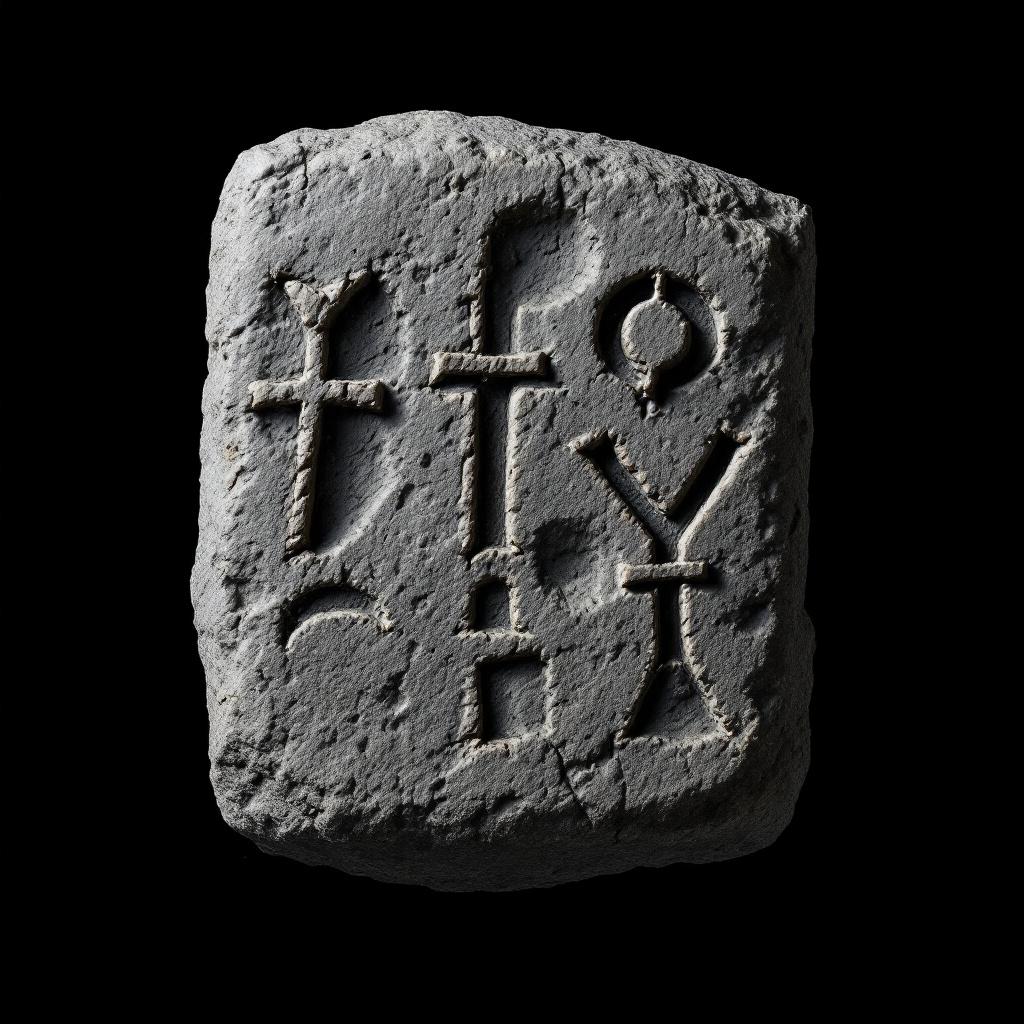
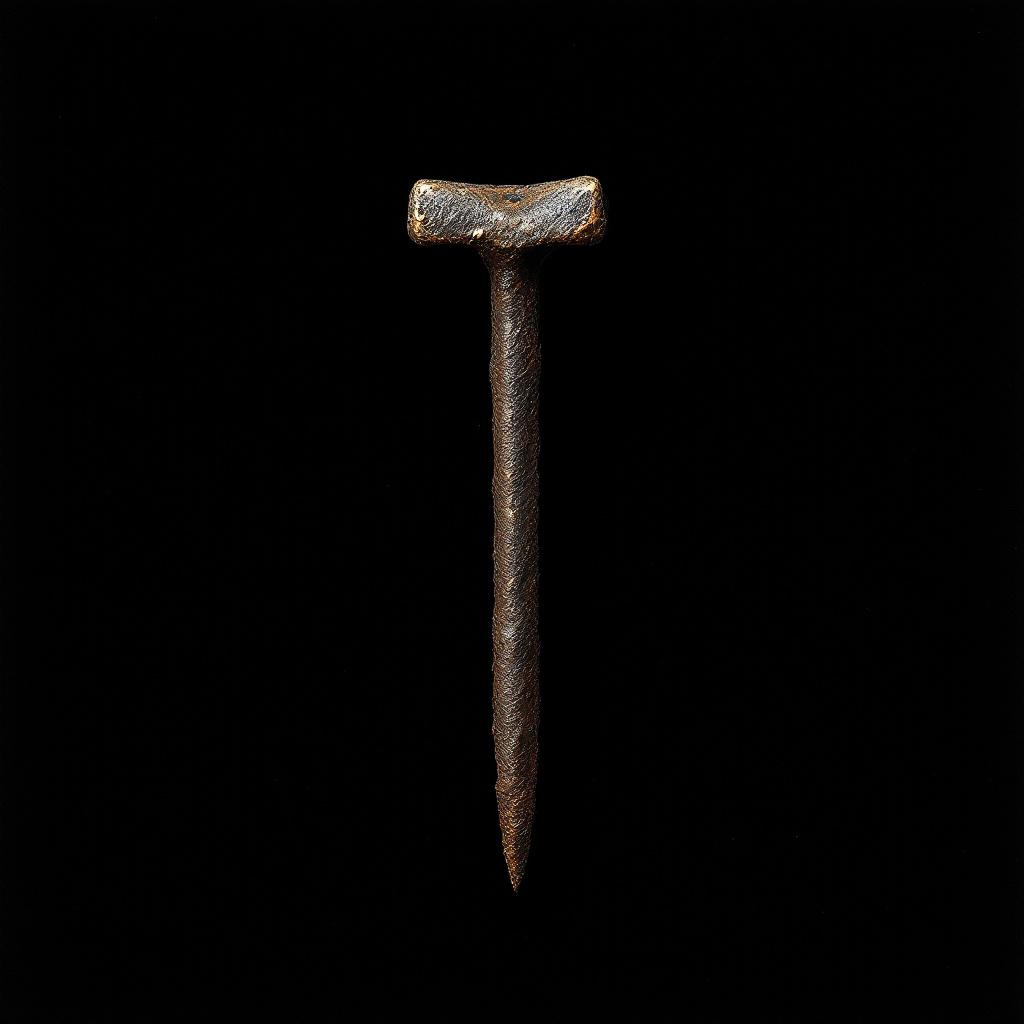
The marginalia preserved alongside the saga record additional measures. An iron nail was driven through the soles of the feet of the body before burial. The body was carried out of the household not through the door but through a hole made in the wall, which was then filled in, so that the path back could not be retraced. The body was laid face down. The body was reburied at a distance, in unworked land, with stones laid across it.
It is recorded that where the door-doom was kept, the dead in those households did not walk again. It is recorded, in the same passages, that the door-doom was not always available. There were households in which the rite had been forgotten, or in which there were no witnesses of standing, or in which the household itself was the cause of the haunting. In those households, the sagas note, the dead were permitted to remain. The records do not say what became of the living who lived alongside them.
The Glamr account, set against the door-doom record, reads as a case in which the rite was not summoned and the encounter went forward without it. Grettir survived the encounter. The curse the encounter laid did not, by the saga’s account, leave him.
- Grettis Saga (the Saga of Grettir the Strong), translated by G. H. Hight. London: J. M. Dent, 1914. Chapters 32 to 35, on Glamr; chapter 18, on Karr the Old. The Glamr episode and the curse line are recorded in chapter 35.
- Eyrbyggja Saga (the Story of the Ere-dwellers), translated by William Morris and Eirikr Magnusson. London: Bernard Quaritch, 1892. The Froda hauntings, chapters 50 to 55.
- Laxdaela Saga, translated by Muriel A. C. Press. London: J. M. Dent, 1899. The episodes of Hrapp the Hebridean, chapter 17 and chapter 24.