The Voice in the Bell House
United States, Tennessee (Robertson County, the settlement at Adams) · 1817 to 1821, with reported recurrence 1828
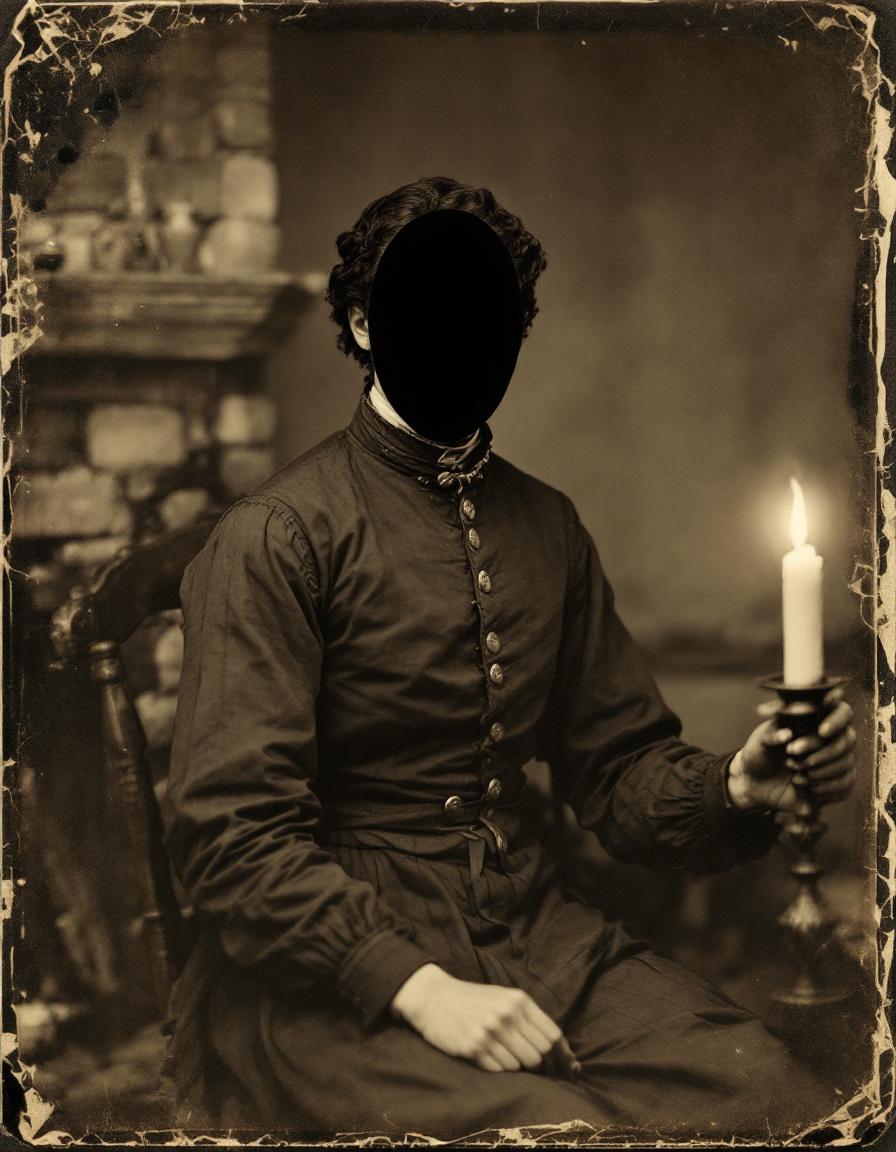
The household was that of John Bell, a planter of the Adams settlement in Robertson County, Tennessee. The settlement was small. The county had been organised twenty years earlier. The land was new to the plough, and the families were the families of the second generation of the migration west across the Cumberland.
The records agree the disturbances began in 1817.
The first reports were small. A figure was seen in a field at the edge of the property. The figure was variously described, in the depositions Ingram collected from the surviving witnesses three-quarters of a century later, as a black dog, as a hare with the head of a man, as a woman in grey at the fence-line. The figure was approached. It was not, in any of the reported approaches, present when reached.
The disturbances came indoors next.
The records describe rappings on the boards of the walls and the floor. They describe the bedclothes pulled from the children where the children slept. They describe slaps, given to the daughter Betsy without a hand to give them. They describe pinches that left marks the next morning. The household, by the close of 1817, did not sleep without one of the men sitting up.
The voice came in 1818.
On the record
The record is what makes the case. Other hauntings of the period were reported. Few were transcribed. The Bell case was transcribed because the voice, when it began, did not stop, and because the voice, when it spoke, spoke loudly enough that the neighbours heard it from the porch, and because the neighbours, having heard it, brought others, and because the others, by the end of the four years, included men of standing in the county, and the men of standing wrote letters.
The fullest collected record is Ingram’s, published in 1894. Ingram had been a newspaper editor in the next county. He had spent twenty years gathering the depositions of the surviving witnesses and their children. He had also been given, he wrote, the manuscript of Richard Williams Bell, the youngest son, who had been seven years old when the disturbances began and who had set down, in 1846, what he and his family had endured. The manuscript, Ingram wrote, was titled Our Family Trouble.
The manuscript is the contested element. Ingram printed sections of it. The original has not, the modern record agrees, been seen by anyone outside Ingram. Whether the manuscript existed in the form Ingram described, or in any form, has been debated since the close of the nineteenth century. The depositions Ingram collected from the other witnesses are independent of the manuscript and do not depend on it. They are the firmer ground.
The depositions agree on the voice.
The voice spoke from empty corners. It spoke from the chimney. It spoke from the rafters. It spoke at first in fragments, in whispers that the household could not place, and within months in full sentences, in the inflections of educated speech, and within a year in the voices of others. It quoted scripture. It quoted long passages with the chapter and verse rendered correctly. It sang the hymns, in their entirety, in the voices of the women who had sung them at services the night before. The depositions agree that this last detail, more than any other, was the detail at which the household stopped trying to argue with the voice.
The voice named itself by several names. Kate. Old Kate. The witch of the Bells. It claimed, when pressed, to have been the spirit of a neighbour woman who had died, and who had been wronged in life by John Bell over a property matter. It claimed, on other days, to be a different spirit. It claimed, on others, to be no spirit at all. The depositions agree that none of the namings were stable.
It said it would kill John Bell. It said this for three years. John Bell died in December of 1820. A small vial was found in the cabinet, the records say, that had not been there before. The voice, when asked what was in the vial, claimed it. It claimed it loudly. It said the contents had been given to the man and the man had not survived the giving.
On the counter-rite the family did not perform
The neighbouring families, as the depositions record, brought salt. They brought it in pinches and they brought it in handfuls, and they laid it at the thresholds of the Bell house, and the women of the Adams settlement crossed the doors with it before they crossed back over their own. The records do not say it had effect.
The Bell household, the depositions agree, did not perform any rite. They prayed. They received visitors. They permitted the men of standing to come and to sit and to listen. They did not call a Methodist circuit-rider for the laying-on of hands, though one was within the county, and they did not call an older woman from the older traditions of the German settlements to the east, though one was known to come for such matters. The voice was, the records agree, asked once whether the rites would have stopped it, and the voice, the records agree, laughed.
It withdrew, by its own account, in 1821. It returned in 1828, briefly, to the elder son’s house. It withdrew again. It promised to return in a hundred years. The records do not record whether the promise was kept.

- Ingram, M. V. An Authenticated History of the Famous Bell Witch. Clarksville, Tennessee: Leaf-Chronicle Steam Print, 1894. The fullest collected record of the haunting.
- Skinner, Charles M. Myths and Legends of Our Own Land. Philadelphia: J. B. Lippincott, 1896. The American compendium entry.
- Bell, Richard Williams. Our Family Trouble (purported family manuscript, c. 1846, transcribed in Ingram). The single first-person account, contested in the modern record.